Tarot Is More Than Memorisation: How to Read the Story Beneath the Cards
A lot of people think learning tarot means memorising seventy-eight card meanings and hoping they remember the right one when a card lands on the table.
And honestly, I understand why.
Tarot can feel overwhelming at the beginning. There are Major Arcana, Minor Arcana, suits, numbers, court cards, symbols, spreads, guidebooks, personal intuition, and then someone online casually says, “Just trust what you feel,” as if that magically solves the fact that you are staring at the Seven of Cups wondering whether it means choices, confusion, fantasy, overwhelm, temptation, or all of the above.
The answer is usually context.
Tarot is not just memorisation. Memorisation can help, but it is only one part of the practice. If you rely on memorisation alone, the cards can start to feel flat. You may know the keywords, but still struggle to understand what the card is saying in this reading, for this question, in this moment.
Tarot becomes more meaningful when you learn to read the structure, symbolism, intuition, context, and story beneath the cards.
That is where the practice begins to breathe.
Memorisation Is a Starting Point, Not the Whole Path
There is nothing wrong with learning keywords. They give you somewhere to begin.
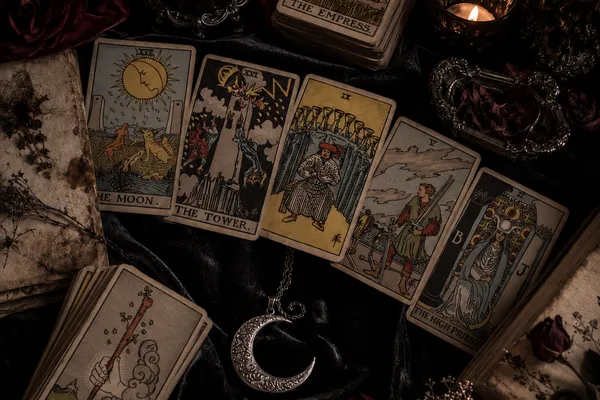
The Fool as beginnings. Death as release. The Tower as upheaval. The Star as hope. The Moon as uncertainty and intuition.
These are useful anchors, especially when you are first learning. Keywords help you build confidence and stop every reading from feeling like you are trying to decode an ancient language with no dictionary.
But keywords are not the whole card.
If you only memorise “Death means endings,” you may miss the deeper teaching. Death can speak to release, yes, but it can also reveal where transformation is already underway. It can show the natural closing of a cycle, the grief that comes with change, and the space that opens when something has completed its time. It can name the threshold between who you have been and who you are becoming.
That is a very different reading.
One creates fear. The other creates awareness.
The card did not change. The relationship with the card did.
Tarot Has Structure
Tarot is not random. It has bones.
The deck is built with structure, and when you understand that structure, readings become much easier to interpret. The Major Arcana shows the larger initiatory journey of life, identity, growth, shadow, transformation, and integration. The Minor Arcana brings that journey into everyday experience through emotions, thoughts, actions, resources, relationships, conflict, desire, work, and spiritual practice.
This is where tarot becomes less intimidating.
You are not just learning seventy-eight separate cards. You are learning a system.
The Major Arcana tells the larger story. The suits show where the energy is expressing itself. The numbers show development, tension, movement, or completion. The court cards often reflect roles, maturity, personality, or ways of engaging with a situation.
Once you understand that structure, you can begin to read the card as part of a living pattern instead of treating it like an isolated flashcard.
This is also where a visual guide can help. A resource like The Fool’s Journey Visual Guide gives you a wider view of how the Major Arcana moves through stages. It shows that The Fool is not just one card. The Fool is the traveller moving through the lessons of the deck.
The cards become a path, not a pile of meanings.

The Fool’s Journey visual guide: a map of the Major Arcana as a path of growth, shadow, initiation, and return.
Symbolism Gives the Cards Their Depth
Tarot speaks in symbol.
The details in a card are not just decoration. A mountain, river, crown, cup, sword, animal, garden, storm, or veil can change the way the card speaks. These symbols create layers, and those layers help us move beyond a single memorised meaning.
Take The Lovers as an example. The card is not only about romance. It speaks to relationship, choice, alignment, vulnerability, desire, and the moment where values become embodied through action. It can show connection and devotion, but it can also reveal the darker side of being ruled by emotion, temptation, or what feels good in the moment.
The Lovers asks for honesty, not impulse. It reminds us to make choices with both heart and discernment, so desire is not leading us somewhere our deeper self does not truly want to go.
That is the power of symbolism. One card can hold love, beauty, attraction, decision, consequence, and self-trust at the same time. If we only memorise “The Lovers means love,” we miss the deeper invitation.
You do not need to memorise every symbol perfectly before you begin. That can become another pressure point. Instead, start by noticing what draws your attention.
Ask yourself:
What part of the image am I noticing first?
What emotion does this symbol bring up?
What is happening in the card?
Where does the energy seem to be moving?
That noticing is part of the reading.
Your intuition often enters through attention.
Intuition Needs Something to Work With
People often talk about intuition in tarot as if it floats in from nowhere. Sometimes it does feel like that. A phrase lands. A meaning clicks. A card suddenly makes sense in a way you cannot fully explain.
But intuition is not separate from study.
Intuition deepens when it has structure to move through. The more you learn the language of tarot, the easier it becomes to recognise when your intuition is speaking through that language.
Think of it like learning music. You can feel music instinctively, but learning rhythm, notes, and structure gives you more ways to express what you feel. Tarot works in a similar way.
Your intuition does not replace learning.
It brings the learning to life.
This is why tarot practice needs both. If you only study, the reading can become rigid. If you only rely on intuition, the reading can become vague or inconsistent. When the two work together, the cards begin to speak with more clarity.
Context Changes Everything
A card does not mean the same thing in every reading.
The question, the spread position, the surrounding cards, the timing, and the emotional reality of the person receiving the reading all shape the message.
The Four of Pentacles might speak to financial caution in a money reading. In a relationship reading, it might point to guardedness or fear of vulnerability. In shadow work, it might reveal where someone is gripping tightly because letting go feels too exposed.
Same card. Different context.
This is why tarot is not a simple matter of pulling a card and reciting a definition. The card must be read in relationship with the question and the situation.
A beginner might ask,
“What does this card mean?”
A deeper reader asks,
“What does this card mean here?”
That one word changes the practice.
Tarot Becomes a Conversation
Once you understand structure, symbolism, intuition, and context, tarot begins to feel less like memorisation and more like conversation.
A card is not one fixed answer. It changes depending on the question, the spread, the surrounding cards, and the life being brought to the reading. This is why tarot can be so useful for shadow work. It helps reveal the shape of a pattern without forcing you into shame or urgency.
If you are learning tarot, try this with one card.
Pull a card and write down the keyword you already know. Then look at the image and ask:
What is this card showing me, not just telling me?
Notice the colours, the figures, the movement, the symbols, and the feeling of the card. Then place it into context. How would this card speak differently in a question about love, work, boundaries, healing, money, or spiritual practice?
You will start to notice that the card has layers.
Tarot is not a test of whether you have memorised enough meanings. It is a relationship you build through returning, listening, and noticing when a card speaks differently than expected.
The guidebook can support you. Keywords can support you. Beautiful decks can support you.
But they do not create the reader.
Your practice does.
Learning the Journey Beneath the Cards
This is what we explore inside The Fool’s Journey.
Not just card meanings, but the path beneath them. The structure of the Major Arcana. The symbols that keep appearing. The way intuition and context shape interpretation. The way tarot can support shadow work, self-trust, and spiritual practice without becoming fear-based or performative.
Because tarot is not just something to memorise.
It is something to enter.
A doorway into story, reflection, pattern, and return.
And like any real practice, it begins one card at a time.