The Bones Beneath the Craft: Why Witchcraft Needs Foundations
Witchcraft is often recognised through its visible pieces.
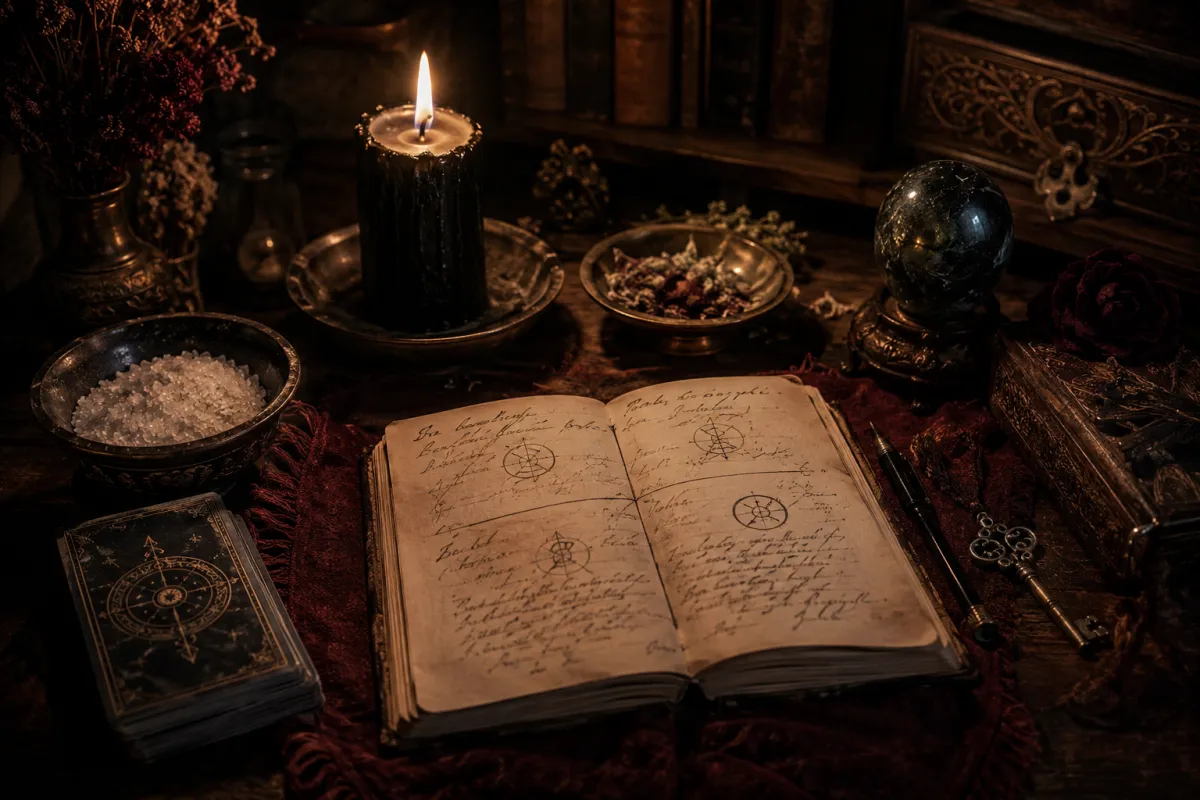
The candle flame. The herbs. The tarot deck. The altar. The moon water on the windowsill. The spell jar on the shelf. The ritual tools arranged with care.
These things can be beautiful. They can carry memory, intention, devotion and power, but they are not the whole practice.
Beneath every spell, reading, ritual, and act of magick, there is something less visible holding the work together. Grounding. Intention. Protection. Energy awareness. Ritual structure. Discernment. Personal sovereignty.
These are the bones beneath the craft.
They are the roots that allow the visible practice to hold. Without them, witchcraft can become scattered even when it looks meaningful from the outside. A ritual may include the right tools and still feel disconnected. A spell may use the right correspondences and still lack direction. A tarot reading may offer insight, yet leave you spiralling because your self-trust has not been given room to stand beside the cards.
Foundations are not there to make witchcraft rigid. They are there to give your practice somewhere to root, somewhere to return, and somewhere to deepen without becoming ungrounded, performative, or dependent on someone else’s authority.
Foundations Are the Difference Between Collecting and Practising
Many people gather pieces of witchcraft before they understand how those pieces belong together.
That is not a failure. Curiosity is often one of the first ways the path calls us back. A tarot deck catches your attention. A herb feels important. A moon phase stirs something in you. A protection charm, a book, a ritual, or a single sentence makes something in your body lean closer.
There is nothing wrong with following that thread.
But over time, the practice asks for more than collection. It asks for relationship.
A herb is not only an ingredient. A candle is not only a colour. A tarot card is not only a definition. A ritual is not only a sequence of actions. Each part of the craft becomes more powerful when you understand what it is doing, why it is present, how it relates to the intention, and how it changes the energy of the working.
Foundations help you move from gathering tools to building practice.
They allow you to understand not only what to do, but why you are doing it.
That is where witchcraft begins to become lived.
Grounding Gives the Work a Body
Ritual without grounding can become something you perform from the neck up.
You may know the words. You may know the steps. You may have chosen the candle, written the petition, placed the herbs, and followed the timing. But if your body has not arrived, the ritual may feel distant from you, as though you are watching yourself practise instead of entering the work.
Grounding brings the craft back into the body.
It reminds you that magick does not only happen in thought, symbol, or spirit. It also happens through breath, sensation, attention, presence and action. Your body is not separate from your witchcraft. It is one of the first places the work becomes real.
Before you cast, read, release, invoke, protect or call anything in, grounding gives your energy somewhere steady to stand.
This can be as simple as feeling your feet against the floor, breathing into your belly, placing a hand over your chest, naming what is present, or visualising roots moving from your body into the earth.
The method can be simple. The effect is not.
Grounding changes the relationship between you and the ritual. It moves the work from appearance into presence.
Intention Gives the Spell Direction
A spell without intention can become a beautiful collection of unrelated force.
You can use all the right ingredients and still feel the energy pulling in different directions if the centre of the working is unclear.
Intention is the thread that gathers the spell.
It tells the candle why it is burning. It tells the herbs what they are supporting. It tells the petition where to point. It tells your own energy what it is committing to.
This is why clarity carries more power than complexity.
Before building a spell, it helps to ask what the working is actually here to do. Is it calling something in, releasing something, protecting something, strengthening something, revealing something, healing something, blessing something, or binding something into place?
The more clearly you can name the purpose, the more honestly the rest of the spell can respond.
A clear intention might be:
I am grounded, protected and energetically clear.
My voice is steady, and my boundaries are honoured.
This home is calm, protected and spiritually clear.
My path opens with clarity, support and aligned action.
These statements are not decorative. They are instructions for the energy.
When intention is clear, spellwork becomes less scattered. The tools stop competing for attention and begin working as part of the same current.
Protection Gives the Practice Edges
Protection is sometimes misunderstood as fear, but in a grounded practice, protection is a form of care.
It is the craft of knowing what has access to you.
Protection gives your practice edges. It helps you open intentionally and close intentionally. It helps you understand what belongs in your energy, what needs to be cleared, what needs to be strengthened, and what needs to be refused.
This can look spiritual, but it can also be very practical.
It may be cleansing your space before ritual, warding your home, grounding before tarot, closing a spell properly, not reading for someone when you feel emotionally flooded, or refusing to turn your intuition into an obligation for people who only want reassurance.
Protection helps you stay in relationship with your power without leaking yourself into every person, problem, or spiritual current around you.
It does not make the practice less loving. It makes it more sustainable.
A witch without protection may still be powerful, but she may also become exhausted, overextended, porous, and unsure where her energy ends and everything else begins.
Protection helps you remain with yourself.
Energy Work Teaches You How Magick Moves
Witchcraft is not only symbolic. It is energetic.
The candle is a symbol, but the focus you bring to it has movement. The words of a spell are language, but the way your body responds to them carries information. A tarot card is printed image and archetype, but the sensation it stirs in you can become part of the reading.
Energy work teaches you how to notice those movements.
It helps you recognise the difference between grounded intuition and fear, between a completed ritual and one that still feels open, between your own emotion and energy you may have absorbed from someone else.
This does not mean you need to experience energy dramatically. Not everyone feels heat, tingling, pressure or immediate shifts. Some people sense energy through mood, breath, dreams, symbols, emotional changes, body tension, or patterns that become clearer over time.
Energy work begins with attention.
You might ask yourself:
What changes when I ground?
What happens when I speak the intention aloud?
Where does my body soften or tighten?
What feels heavy, restless, clear, charged, open, or complete?
The more you learn your own energetic language, the less dependent you become on external confirmation.
Your practice becomes something you can feel, not only something you can describe.
Ritual Structure Creates a Container
A ritual does not need to be elaborate, but it does need a container.
Without structure, the energy of the working can feel vague. You may not know when the ritual has begun, what the central action is, how the power is being directed, or when the work is complete.
Structure gives the ritual a shape.
A simple structure might be:
Arrive. Ground. Name the intention. Open the space. Complete the working. Listen. Close. Return.
That is enough.
Once you understand the bones of ritual, you can adapt them. You can make your practice simpler, deeper, more personal, more devotional, or more ceremonial depending on what the working requires.
Structure is not there to remove instinct. It is there to hold it.
When you understand why each part of a ritual exists, you no longer have to copy blindly. You can choose with purpose. You can adjust without losing the thread. You can create a working that fits your body, your tools, your home, your capacity and your spiritual relationships.
This is where ritual becomes more than action.
It becomes relationship in motion.
Tarot Needs Self-Trust as Much as Knowledge
Tarot has its own foundations.
There is structure in the deck. The Major Arcana tells a larger story of becoming, challenge, revelation and integration. The suits bring the reading into different areas of life. Numbers add movement. Court cards bring personality, roles, maturity and expression. Spread positions create context.
Learning these foundations helps the cards become less overwhelming.
But knowledge alone is not enough if every reading becomes a search for certainty outside yourself.
Tarot asks for self-trust.
Not the kind that assumes every first impression is automatically correct, but the kind that lets you listen before dismissing yourself. The kind that notices what rises in the body, what symbol draws the eye, what connection appears between cards, and what part of the message carries weight.
Self-trust does not replace study.
It stands beside it.
The guidebook can teach you. The tradition can teach you. The cards can teach you. But part of the reading will always require you to be present enough to hear what is moving through your own intuition.
Without self-trust, tarot becomes a place where you keep asking for permission.
With self-trust, it becomes a conversation.
Sovereignty Is the Foundation Beneath Everything
At the heart of witchcraft is sovereignty.
Not domination. Not control over every outcome. Not spiritual superiority. Not the performance of being powerful.
Sovereignty is the practice of returning to your own authority.
It is the ability to receive guidance without abandoning yourself. To learn from teachers without handing them your power. To honour tradition without erasing your own truth. To ask questions without making someone else the final judge of your path.
Without sovereignty, witchcraft can become another place where you seek approval.
You may look for someone else to tell you what every sign means, whether every ritual worked, whether every dream was important, whether every choice is spiritually correct, whether your practice counts.
With sovereignty, learning becomes different.
You are still open. You are still humble. You still study, practise, listen and grow. But you remain in relationship with your own centre.
This is what allows witchcraft to become personal without becoming careless.
It is also what allows it to become powerful without becoming performative.
A Practice for Building Your Foundations
This practice is not a spell in the traditional sense. It is a ritual mapping exercise you can use when your practice feels scattered, unclear, or disconnected.
It helps you identify which part of the foundation needs attention before you add more tools, more rituals, or more complexity.
The Four Foundations Map
Purpose
To bring your witchcraft back to grounding, intention, protection and self-trust before beginning or deepening a practice.
You Will Need
A journal or piece of paper
A pen
Optional: one candle
Optional: a grounding object, such as a stone, key, bowl of salt, or piece of jewellery
Step One: Draw the Map
On your page, draw a cross to divide the paper into four sections.
Label the sections:
Grounding
Intention
Protection
Self-Trust
If you are using a candle, light it with the intention:
My practice is steady, clear and rooted.
Step Two: Grounding
In the grounding section, answer:
How do I return to my body before I practise?
Write down what genuinely works for you. This may be breath, movement, visualisation, touching the earth, holding a grounding object, stretching, washing your hands, or simply naming where you are.
Then write one small grounding action you can repeat this week.
Step Three: Intention
In the intention section, answer:
What is my practice in service of right now?
Keep the answer honest.
It might be clarity, protection, healing, confidence, grief work, devotion, ancestral connection, daily steadiness, or learning to trust your intuition.
Then write one present-tense intention.
Examples:
My practice is grounded, honest and clear.
My energy is protected as I deepen my craft.
I return to my magick with patience and devotion.
Step Four: Protection
In the protection section, answer:
What needs clearer boundaries in my spiritual practice?
This could be your energy, your time, your home, your social media intake, your readings for others, your emotional capacity, or the way you close rituals.
Then write one protective action you can take.
It may be cleansing your space, setting a time limit, closing readings properly, taking a break from comparison, warding your room, or choosing not to practise when you are depleted.
Step Five: Self-Trust
In the self-trust section, answer:
Where am I still asking for permission to trust myself?
Write without judging the answer.
Then ask:
What do I already know?
Let the response be simple. It does not need to be profound to be true.
Step Six: Close the Practice
Look at the four sections and notice which one feels strongest and which one feels neglected.
Place your hand over the page and say:
My practice does not need to be perfect to be powerful.
It needs roots.
It needs care.
It needs truth.
It needs me present within it.
If you lit a candle, let it burn for a short time while you sit with what you have written, then snuff it when complete.
Keep this page in your grimoire and return to it whenever your practice feels scattered.
Foundations Make the Practice Livable
Witchcraft does not need to be elaborate to be real.
It does not need to look impressive to carry power.
But it does need somewhere to root.
Grounding brings the work into the body. Intention gives the spell direction. Protection gives the practice edges. Energy work teaches you how magick moves. Ritual structure gives the working a container. Self-trust allows your own voice to remain present. Sovereignty keeps you from handing your power away.
These foundations do not make witchcraft less intuitive.
They make it more embodied.
They help your practice become something you can return to when life is messy, when doubt rises, when your energy is low, when the online world feels loud, and when you are ready to stop collecting fragments and begin building a path that can actually hold you.
Step Into Path Reclaimed
This is why Path Reclaimed begins with clarity, protection, intention and self-trust.
Before deeper spellcraft, before more complex ritual, before advanced practices, there has to be a place where your energy can land and your voice can return.
Inside The Sanctum: Path Reclaimed, we begin with the foundations of modern witchcraft, not as a checklist, but as a way of rebuilding relationship with your body, your power, your practice, and the witch within you.
If your practice has felt scattered or disconnected, you do not need to gather more fragments.
You may simply need stronger roots.
The Sanctum: Path Reclaimed opens on Imbolc.
Your path is ready when you are.